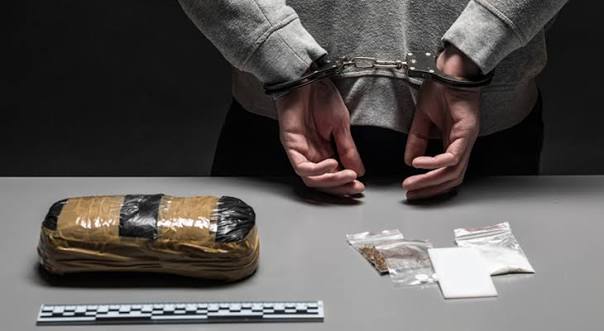
Drug possession charges can arise from routine traffic stops, home searches, or anonymous tips, carrying severe legal and personal repercussions that can alter your future with a criminal record, fines, and potential incarceration . The specific charges and penalties vary dramatically depending on the jurisdiction, the type and quantity of substance, and the individual's prior history .
In 2026, the legal landscape for drug possession is complex and rapidly evolving—from federal sentencing enhancements for repeat offenders to British Columbia's decriminalization experiment and Illinois's automatic expungement for juvenile cannabis offenses. This guide explains what defendants need to know, including federal penalties, new state laws, and proven defense strategies.
Federal Penalties for Simple Possession (21 USC 844)
First Offense
- Imprisonment: Up to 1 year
- Fine: Minimum $1,000
- Both fine and imprisonment may be imposed
Second Offense
- Imprisonment: 15 days – 2 years
- Fine: Minimum $2,500
- Mandatory minimum sentence applies
Third+ Offense
- Imprisonment: 90 days – 3 years
- Fine: Minimum $5,000
- Enhanced penalties for repeat offenders
Federal Marijuana Pardons (2022–2023)
- Non-citizens not lawfully present in the U.S. at time of offense
- Other controlled substances
- Possession with intent to distribute
- Driving offenses committed while under influence of marijuana
Eligible individuals can apply for certificates of pardon through the Pardon Attorney .
Civil Penalties for Small Amounts (21 USC 844a)
Prior Conviction Bar
Cannot be assessed if individual previously convicted of Federal or State drug offense .
Two-Time Limit
May not be assessed on more than two separate occasions .
5-Year Statute
Proceeding must begin within 5 years of violation .
If individual: (1) has not previously been assessed a civil penalty; (2) has paid the assessment; (3) complied with conditions; (4) no drug conviction; and (5) passes drug test showing drug-free .
After expungement, individual may lawfully deny the proceeding under oath .
Canada: British Columbia's Decriminalization Exemption
Under subsection 56(1) of the Controlled Drugs and Substances Act, adults in British Columbia (18+) found in possession of small amounts of certain illegal drugs for personal use will not be arrested, charged, or have their drugs seized .
Cumulative amount of certain illegal drugs
Schools
Childcare Facilities
Motor Vehicles
Playgrounds, Splash Pads, Skateparks
May 7, 2024: Federal government granted BC's request to prohibit possession in all public spaces. Exemptions continue in private residences, healthcare clinics, places where people are lawfully sheltering, and overdose prevention sites .
This exemption is part of a broader strategy to divert people who use drugs away from the criminal justice system and toward health and social services .
Illinois: Automatic Expungement for Juvenile Cannabis Offenses (HB1815)
HB1815, introduced in the 104th General Assembly, amends the Juvenile Court Act to require automatic expungement for cannabis-related juvenile offenses .
- Acts that would be criminal violations under the Cannabis Control Act
- Criminal violations of Section 3.5 of the Drug Paraphernalia Control Act (with respect to cannabis)
- Committed before the person's 21st birthday
Law enforcement agencies must automatically expunge eligible records on or before January 1 and July 1 of each year. The clerk of the circuit court shall expunge juvenile court records upon court order or automatically on those dates .
Mississippi 2026 Session: Multiple drug-related bills died in committee on February 3, 2026 :
Virginia: Enhanced Penalties for Possession with Firearms
Under § 18.2-308.4, simultaneous possession of a controlled substance and a firearm carries severe mandatory minimum sentences .
Class 6 felony + 2 years mandatory minimum – Unlawfully possessing a controlled substance (Schedule I/II) while simultaneously possessing any firearm on or about the person .
Class 6 felony + 5 years mandatory minimum – Possessing, using, or displaying a firearm while committing or attempting to commit illegal manufacture, sale, distribution, or possession with intent to distribute a Schedule I/II controlled substance or more than one pound of marijuana .
Actual vs. Constructive Possession: What Prosecutors Must Prove
The prosecution must prove, beyond a reasonable doubt, that the defendant knowingly possessed a controlled substance .
Substance found on the person (e.g., in a pocket) .
Individual had knowledge of the substance and the ability to control it, even if not on their person (e.g., drugs found in shared apartment or car) .
Proven Defense Strategies for Drug Possession Charges
Challenge the Search
The Fourth Amendment protects against unreasonable searches and seizures. This is often the most potent defense .
- Did police have a valid warrant?
- Was consent freely given?
- Were exceptions (search incident to arrest, plain view) properly applied?
Challenge Possession
Create reasonable doubt about knowledge and control .
- Was the defendant aware the substance was present?
- Did it belong to someone else?
- In shared spaces (cars, apartments), linking substance exclusively to one individual is a significant hurdle for prosecution .
Question Chain of Custody & Lab Analysis
Prosecution must establish an unbroken chain of custody from seizure to court .
Challenge lab procedures, analyst qualifications, and testing equipment accuracy. In Michigan, labs admit results can be as much as 50% wrong for low THC measurements .
Request independent testing – substance may not actually be an illegal drug or may be below criminal threshold .
Entrapment
Occurs when law enforcement induces a person to commit a crime they would not have otherwise committed .
Requires showing that the idea and persuasion for the crime originated with the police, not with the defendant .
Valid Prescription Defense
A complete defense to possession of pharmaceutical controlled substances if the individual has a legitimate, current prescription from a licensed physician .
Prosecutorial Mistakes
Police mistakes happen in pretty much every case. Evidence can be mishandled, contaminated, lost, or mixed up in collection .
These mistakes can be used as negotiating leverage or to seek dismissal .
Alternatives to Conviction: Diversion Programs
Even when evidence appears strong, conviction isn't inevitable. Experienced defense attorneys often negotiate for pre-trial diversion programs .
Drug Courts
Treatment-based alternative to incarceration
Deferred Adjudication
Charges dismissed upon successful completion of conditions
Treatment & Counseling
Drug treatment, counseling, community service
For first-time offenders charged with simple possession, these alternatives can prevent a permanent record that severely affects employment, housing, and educational opportunities for years .
Beyond Jail: Collateral Consequences of a Drug Conviction
Employment
Housing
Financial Aid
Professional Licenses
Firearm Rights
Immigration
A drug charge can lead to consequences that arise many, many years after the person has been convicted and completed their sentence .
Know Your Rights, Build Your Defense
Drug possession laws in 2026 are a complex patchwork of federal mandatory minimums, state decriminalization experiments, and emerging expungement opportunities. Key takeaways:
- Federal penalties escalate quickly: 1 year (first), 15 days–2 years (second), 90 days–3 years (third+) with mandatory minimum fines .
- Biden's marijuana pardon covers simple possession, attempted possession, and use for U.S. citizens and lawful permanent residents .
- BC's decriminalization exemption (effective through Jan 31, 2026) removes criminal penalties for possession of up to 2.5 grams .
- Civil penalties under 21 USC 844a offer an alternative to criminal prosecution for small amounts, with expungement available after 3 years .
- Illinois HB1815 requires automatic expungement of juvenile cannabis offenses .
- Fourth Amendment challenges remain the most potent defense—if the search was illegal, evidence may be suppressed .
- Chain of custody and lab errors can lead to dismissal; labs admit results can be 50% wrong for low THC measurements .
- Virginia imposes mandatory minimums (2–5 years consecutive) for possession with firearms .
An allegation isn't a conviction. A robust, strategic defense is paramount . If you're facing drug possession charges, consult an experienced criminal defense attorney immediately to protect your rights and explore all available defenses.