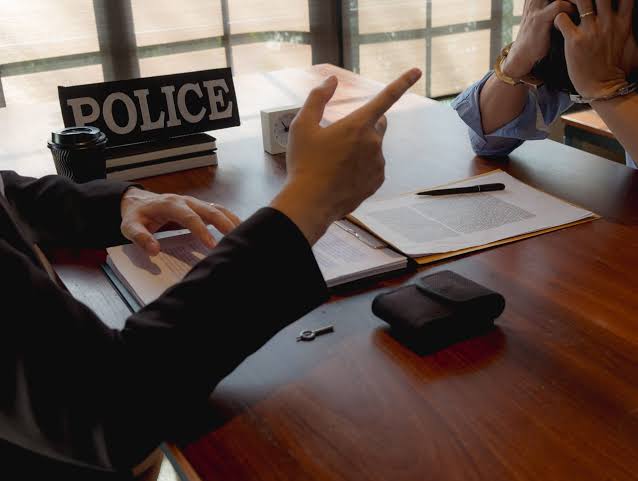
The interrogation room is one of the most high-stakes environments in the criminal justice system. What you say—or don't say—during those critical moments can determine the outcome of your case, often before you ever see a courtroom. Police officers are trained investigators whose job is to gather evidence, and in many cases, that evidence comes from the suspect's own mouth .
In 2026, several states have enacted major reforms to protect individuals during police interrogations. California now prohibits undercover officers from interrogating juveniles . New York is considering legislation that would require more specific Miranda warnings . Washington State will soon presume statements obtained through deception are inadmissible . This guide explains your constitutional rights, the critical mistakes to avoid, and how new laws are reshaping police questioning across the country.
The Foundation: Miranda v. Arizona (1966)
Right to Remain Silent
Statements Can Be Used
Right to Counsel
Appointed if Indigent
These warnings are required when a suspect is in custody and subject to interrogation .
2026 Legislation: New Protections Across the Country
Requires Miranda rights statements to be more specific, ending with a mandatory inquiry:
Status: Referred to Codes Committee (Feb 2026)
Effective December 31, 2026: Statements obtained through deception are presumed inadmissible .
Mandates training in rapport-based techniques including:
- PEACE method
- Cognitive interviews
- Trauma-informed interviews
Training available: July 1, 2026
Prohibits undercover officers or their agents from seeking statements from juveniles in custody .
Courts must consider any willful violation in determining officer credibility .
Introduced: February 12, 2026
New York's Proposed Miranda Warning
Washington's Deception Presumption (Effective Dec 31, 2026)
Statements obtained through deception are presumed inadmissible unless the prosecution proves by clear and convincing evidence that the statement was voluntary and not made in response to deception .
New interrogation techniques required:
California's Juvenile Undercover Interrogation Ban
Assembly Bill 1905 (introduced February 12, 2026) adds Section 625.8 to the Welfare and Institutions Code, prohibiting law enforcement from seeking statements from juveniles through undercover operations .
6 Critical Mistakes to Never Make During Interrogation
Not Remaining Calm
If you don't maintain your composure, it's harder to be careful about what you say. You could make statements the police can use against you .
Saying Too Much
It's rarely a good idea to talk to the police. If you must answer some questions, keep answers brief—simple "yes" or "no" responses .
Lying
Lying can result in additional charges. If caught, it reduces your credibility and makes favorable plea bargains harder to obtain .
Not Exercising Miranda Rights
You have a constitutional right to remain silent. If police fail to read your rights, attorneys may get statements excluded .
Agreeing to a Search
Do not consent to searches of your property, vehicle, or person without a valid warrant .
Not Asking for an Attorney
The single biggest mistake is speaking without a lawyer present. Immediately say you want your lawyer present .
What You Should Actually Say
The Fifth Amendment: More Than Just Silence
The Fifth Amendment provides: "No person shall be compelled in any criminal case to be a witness against himself" .
This protection extends far beyond criminal trials. As the Supreme Court held in Kastigar v. United States (1972):
The privilege also protects innocent individuals: "We have emphasized that one of the Fifth Amendment's 'basic functions... is to protect innocent men... who otherwise might be ensnared by ambiguous circumstances'" .
Once You Ask for a Lawyer, Questioning Must Stop
In Edwards v. Arizona (1981), the Supreme Court established a bright-line rule:
This rule applies even to questioning about unrelated crimes and by different law enforcement authorities .
Maryland v. Shatzer (2010): The Edwards rule does not apply after a meaningful break in custody. After 14 days out of custody, police may re-initiate questioning with new Miranda warnings .
Special Protections for Children
The New York City Bar Association's 2026 Legislative Agenda emphasizes:
- ✓ Youth are uniquely vulnerable to coercion
- ✓ Higher risk of unreliable or false confessions
- ✓ Current law does not adequately account for developmental differences
- ✓ Proposed reforms require child consult with attorney before waiving Miranda rights
California's AB-1905 adds another layer: undercover officers cannot seek statements from juveniles in custody .
International Perspective: UK's Adverse Inference Rule
In England and Wales, remaining silent during police interview can lead a future court to draw an "adverse inference" (a negative conclusion). However, this must be balanced against the right to preserve your position where evidence is weak .
This differs sharply from U.S. law, where prosecutors cannot comment on a defendant's silence (Griffin v. California).
What You Must Remember
- You have the right to remain silent. Use it. Anything you say can and will be used against you .
- You have the right to an attorney. If you cannot afford one, one will be appointed .
- Once you ask for a lawyer, questioning must stop until counsel is present .
- Do not consent to searches without a warrant .
- New 2026 laws: NY may require specific Miranda inquiries ; WA presumes deception-based statements inadmissible ; CA prohibits juvenile undercover interrogations .
- Lying to police can lead to additional charges .
- Children receive enhanced protections due to developmental vulnerability .
The interrogation room is not a place for explanations or justifications—it is an evidence-gathering environment where every word you speak can be turned against you . Exercise your rights, stay calm, and demand an attorney. Your future freedom may depend on it.