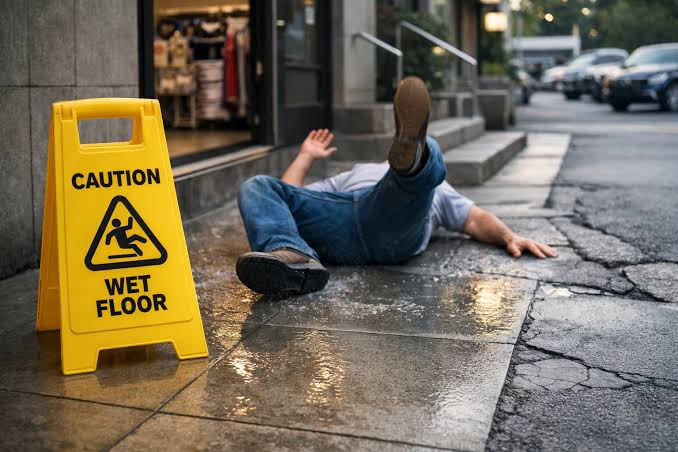
A single moment—a wet floor without a warning sign, an icy patch on a store parking lot, a torn carpet in a hotel hallway—can change your life in an instant. Slip and fall accidents are among the most common causes of emergency room visits, resulting in fractures, head trauma, and back injuries that can lead to months of recovery and thousands of dollars in medical bills .
But when is a property owner legally responsible for your injuries? And what compensation can you actually recover? This comprehensive guide walks you through your legal rights after a slip and fall accident in 2026, including recent legal changes that could affect your claim.
Common Slip and Fall Hazards
Slip and fall accidents can happen anywhere, but certain hazards appear repeatedly in Personal Injury claims:
Wet Floors
Spills, mopping, leaks from refrigerators or skylights
Ice & Snow
Parking lots, sidewalks, untreated walkways
Uneven Surfaces
Broken pavement, cracked sidewalks, potholes
Poor Lighting
Dark stairwells, parking lots, hallways
Clutter
Obstacles in aisles, loose cables, debris
Your Legal Status on the Property Matters
The duty a property owner owes you depends on why you were on the premises :
Invitee
Customer in a store, restaurant patron, hotel guest
Licensee
Social guest, friend visiting your home
Trespasser
Person on property without permission
Proving Your Slip and Fall Case: 4 Essential Elements
Duty of Care
The property owner owed you a duty based on your visitor status .
Breach
The owner failed to maintain safe premises or warn of hazards .
Causation
The hazardous condition directly caused your fall and injuries .
Damages
You suffered actual losses—medical bills, lost wages, pain .
The Notice Requirement: Did the Owner Know?
Property owners aren't automatically liable for every accident. You must prove they knew—or should have known—about the hazard .
Actual Notice vs. Constructive Notice
Actual notice: Someone complained about the leak, or an employee saw the spill .
Constructive notice: The hazard existed long enough that the owner should have discovered it through reasonable inspection . For example, a spill that's been on the floor for 30 minutes.
Recent Case: Medina v 217 LLC (2026)
A New York court ruled that a building owner could be liable when a plaintiff slipped on water leaking through a skylight. Evidence showed prior complaints about leaks "for many years," establishing that the owner had notice of the dangerous condition .
The "Ongoing Storm Rule"
In New Jersey and several other states, commercial property owners have no duty to clear snow and ice during an active storm. Their duty begins within a reasonable time after the storm ends .
Slip and Fall Settlement Values in 2026
Settlement amounts vary widely based on injury severity, liability, and insurance coverage. Typical ranges include :
Note: These ranges are estimates. Your case value depends on medical expenses, lost income, pain and suffering, and available insurance .
Evidence That Builds a Strong Claim
In one case, surveillance footage showing a yellow "Caution Wet Floor" sign placed near a puddle helped defeat a claim—the warning was deemed sufficient .
Important Legal Changes for 2026
Louisiana's New Comparative Fault Law
Effective January 1, 2026, Louisiana shifted from pure comparative fault to a 51% bar rule .
If you are found 51% or more at fault for your slip and fall, you recover nothing. This makes documenting the property owner's negligence more critical than ever .
Ontario's 60-Day Notice Rule
In Ontario, Canada, Bill 118 requires slip and fall victims to provide written notice within 60 days of the accident—or lose their right to sue .
Statute of Limitations: Deadlines You Cannot Miss
Special Government Claims
Claims against cities, counties, or public entities often have much shorter deadlines—sometimes just 6 months . Always check local rules.
Special Situation: Falls at Work
Workers' Comp + Third-Party Claim
If you slip and fall at work, you may have two separate claims :
Workers' Compensation
- Covers medical bills
- Partial lost wages
- No need to prove fault
- No pain and suffering
Third-Party Liability
- Against property owner, not employer
- Can recover pain and suffering
- Requires proving negligence
- Higher potential value
Example: An employee slips on ice in a store parking lot. Workers' comp covers immediate medical bills. But if the ice was caused by a negligent third-party maintenance company, a separate lawsuit can pursue full damages .
Delivery Drivers: DoorDash, Amazon, Uber Eats
If you're injured while delivering for a gig app, property owners still owe you a duty of care. You are considered a lawful visitor, and hazardous conditions—like icy steps or unshoveled walkways—may give you a claim against the property owner .
Immediate Steps After a Slip and Fall
What Compensation Can You Recover?
Economic Damages
- Medical bills (past and future)
- Lost wages and reduced earning capacity
- Rehabilitation and therapy
- Travel costs to appointments
Non-Economic Damages
- Pain and suffering
- Emotional distress
- Loss of enjoyment of life
- Scarring or disfigurement
Protect Your Rights
Slip and fall cases are fact-intensive and require prompt action. Evidence disappears quickly—surveillance footage is overwritten, witnesses move on, and hazards are repaired . Deadlines vary by state, and 2026 brought new laws that can bar your claim if you miss a 60-day notice or exceed a 51% fault threshold .
If you've been injured in a fall, consult an experienced Personal Injury attorney immediately. Most offer free consultations and work on contingency—meaning you pay nothing unless they recover compensation for you .